

Speech Therapy Services in the South Bay
〰️
Speech Therapy Services in the South Bay 〰️
Comprehensive Speech & Language Evaluations for Children Ages 3–12
We recognize that every child develops differently. Our evaluations look beyond a single score or isolated skill to understand the whole child—including how they communicate, understand language, interact with others, learn, and participate in everyday activities.
Evaluations may assess:
Articulation and Speech Sound Development – How clearly your child produces individual speech sounds and whether speech sound patterns are appropriate for their age
Phonological Development – How your child organizes and uses speech sounds within words and connected speech
Receptive Language – How well your child understands words, concepts, questions, directions, and spoken information
Auditory Comprehension – Your child's ability to listen to, process, understand, and respond to spoken language
Expressive Language – How your child uses words, sentences, grammar, and language to express thoughts, ideas, needs, and experiences
Vocabulary Development – Understanding and use of age-appropriate vocabulary
Social Communication – How your child uses language to interact, participate in conversations, take turns, make requests, share information, and connect with others
Pragmatic Language – The use of communication appropriately across different people, situations, and environments
Narrative and Language Organization – The ability to describe, sequence, retell, and organize ideas and experiences
Early Literacy and Phonemic Awareness – Foundational skills that support reading, spelling, and academic development when appropriate for your child's age
Functional Communication – How communication skills are used during everyday activities at home, school, and in the community
Our evaluation process combines standardized assessments, clinical observation, informal assessment, conversation, and caregiver input. We consider your child's developmental history, communication experiences, strengths, challenges, and everyday functioning to develop a comprehensive understanding of their needs.
We also take into consideration factors such as attention, learning style, sensory needs, motivation, and the environment in which communication occurs. This allows us to determine not only what your child is having difficulty with, but also why the difficulty may be occurring and what types of support may be most beneficial.
Following the evaluation, you will receive a comprehensive explanation/report of the findings, including your child's strengths, areas of need, and recommendations for next steps. When appropriate, recommendations may include speech and language therapy, parent coaching, school-based support, referrals to other professionals, or strategies that can be implemented at home and in the classroom.
Our goal is to make the evaluation process informative, supportive, and empowering. We want parents to leave with a clear understanding of their child's communication profile and practical recommendations for helping their child succeed.
Our evaluations are designed to understand the whole child—not simply a test score.
Early Speech and Language Development: Early Intervention/Developmental Delay
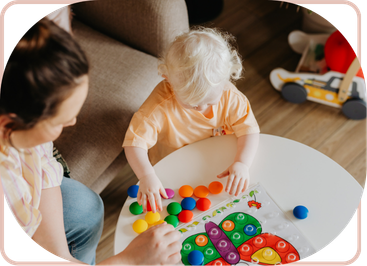
At Blooming Language Learners we provide individualized, play-based speech and language therapy for infants and toddlers in the comfort of your home. Therapy is designed to fit naturally into your child's daily routines, making learning engaging, functional, and meaningful.
We support children who may be experiencing:
Delayed speech or language development
Limited vocabulary or difficulty combining words
Challenges understanding language or following directions
Reduced social communication, joint attention, or play skills
Difficulty imitating sounds, words, gestures, or actions
Early oral-motor concerns related to communication
Risk factors for developmental delays
Speech Sound Production: Articulation & Phonology
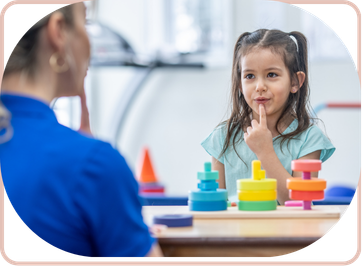
ARTICULATION : Whether your child is just beginning to develop speech sounds or needs support correcting sounds that have persisted beyond the expected age of development, articulation therapy is designed to be engaging, motivating, and tailored to their unique needs.
Articulation therapy may address:
Difficulty producing specific speech sounds (such as /r/, /s/, /l/, /k/, /g/, or other speech sounds)
Speech that is difficult for others to understand
Errors that continue beyond developmental expectations
Challenges with sound placement, coordination, and motor planning for speech
Building clear, confident speech for home, school, and social settings
PHONOLOGY: Rather than focusing on one sound at a time, phonological therapy targets the speech patterns that affect multiple sounds, allowing children to make meaningful gains in overall speech clarity.
Phonological intervention may address:
Final consonant deletion (e.g., saying "ca" for "cat")
Fronting (e.g., saying "tat" for "cat")
Stopping (e.g., saying "tun" for "sun")
Cluster reduction (e.g., saying "pane" for "plane")
Gliding (e.g., saying "wabbit" for "rabbit")
Other speech patterns that reduce overall intelligibility

Receptive Language: Comprehension & Processing
Understanding language is the foundation for learning, communication, and meaningful social interactions. Before children can express themselves effectively, they must first be able to understand the words, directions, questions, and conversations happening around them. Strong receptive language skills support success at home, in school, and in everyday life.
At Blooming Language Learners, we provide individualized, play-based receptive language intervention designed to strengthen your child's ability to understand spoken language and process information more effectively.
Receptive language intervention may address:
Understanding words, concepts, and vocabulary
Following one-step, two-step, and multi-step directions
Answering questions such as who, what, where, when, why, and how
Understanding stories, conversations, and spoken information
Identifying and understanding basic concepts (colors, shapes, size, quantity, location, and time)
Improving listening skills and attention to spoken language
Auditory comprehension and language processing
Understanding classroom instructions and everyday routines
Expressive Language & Social Communication
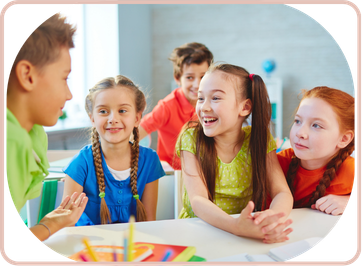
Expressive language is the ability to communicate using words, gestures, signs, or sentences to connect with others and participate fully in everyday life. When children experience challenges expressing themselves, they may become frustrated, have difficulty interacting with others, or struggle to communicate their wants and needs effectively.
At Blooming Language Learners, we provide individualized, play-based expressive language intervention that helps children build the communication skills needed to become confident and successful communicators.
Expressive language intervention may address:
Expanding vocabulary and word use
Combining words into phrases and sentences
Developing age-appropriate grammar and sentence structure
Answering and asking questions
Expressing wants, needs, thoughts, and emotions
Telling stories, describing events, and sharing ideas
Using language for problem-solving and conversation
Building early literacy and language skills that support academic success
Early Literacy & Phonemic Awareness
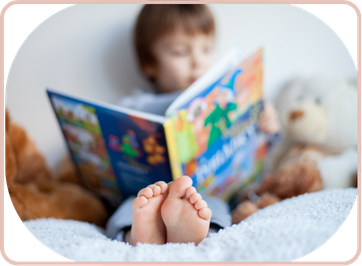
Learning to read begins long before a child opens their first book. Strong early literacy skills are built on a foundation of listening, language, speech sound development, and phonemic awareness—the ability to hear, recognize, and manipulate the individual sounds in spoken words. These foundational skills are essential for learning to read, spell, and write successfully.
Early reading and phonemic awareness intervention may address:
Identifying and producing rhyming words
Recognizing syllables and clapping out word parts
Identifying beginning, middle, and ending sounds in words
Blending individual sounds together to form words
Segmenting words into individual speech sounds
Manipulating sounds by adding, deleting, or substituting phonemes
Letter-sound correspondence and alphabet knowledge
Print awareness and other foundational early literacy skills
Building vocabulary and language comprehension to support reading success
Parent Coaching/Parent Trainings
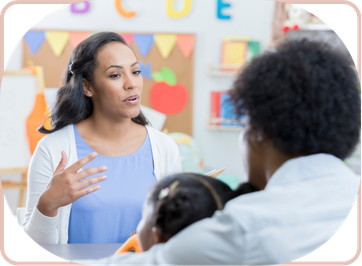
Our parent coaching services are designed to provide practical, evidence-based strategies that can be naturally incorporated into your family's daily routines. Rather than adding more to your already busy schedule, we show you how to turn everyday activities—mealtime, bath time, playtime, story time, getting dressed, or running errands—into meaningful opportunities for communication and learning.
Parent coaching may include:
Understanding speech, language, and communication milestones
Strategies to encourage first words and early language development
Techniques to increase your child's communication during everyday routines
Supporting receptive and expressive language growth
Promoting speech sound development and intelligibility
Enhancing play skills, social communication, and joint attention
Creating language-rich environments at home
Building confidence in supporting your child's communication outside of therapy
Answering questions and providing individualized guidance based on your child's unique needs
Group play experiences for infants, toddlers, & preschool ages!!! (Please inquire for more information)
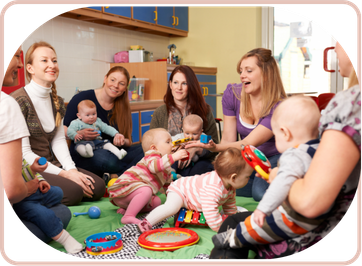
Unlike traditional playgroups, our group play experiences are intentionally designed with evidence-based strategies that support communication development during the years when the brain is growing and learning most rapidly. Caregivers actively participate alongside their child, learning simple techniques to encourage communication, build vocabulary, and create language-rich interactions during everyday routines.
Our classes incorporate:
Early speech and language development
Vocabulary growth and language enrichment
Songs, nursery rhymes, and music for language learning
Shared book reading and early literacy experiences
Play-based learning and social interaction
Turn-taking, joint attention, and early conversation skills
Sensory-rich activities that support communication and engagement
Fine and gross motor activities integrated with language learning
Parent education and developmental tips throughout each class
**Blooming Language Learners is not currently running any community based infant and toddler groups at this time; however, please reach out about our specialized/customized group play events and experiences for infants, toddlers, and preschool aged children.
**The holidays are coming up so keep a lookout for information about our POP-UP Holiday Play Events!!!